
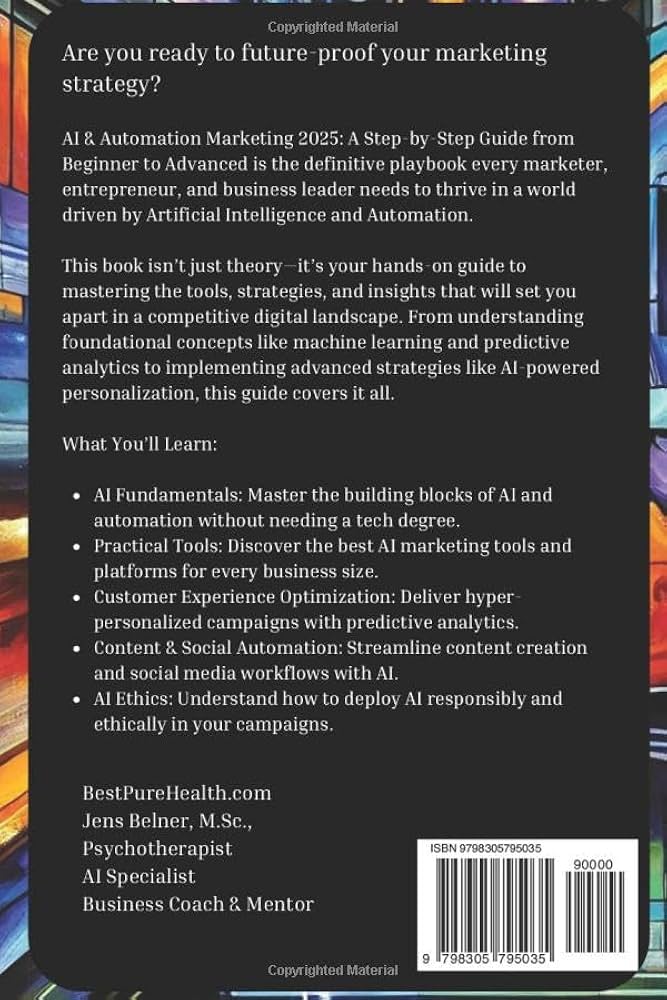
I’ve spent the past decade building and scaling marketing programs across startups and enterprise teams, and I’ve seen one clear trend: when we pair lean strategy with the right AI, results compound fast. In this guide, I’ll show how to automate your marketing with AI tools in 2025—what to automate, which tools to use, how to structure your data, and the workflows that actually move the needle. If you want a practical, evidence-based approach to make AI do the heavy lifting—while keeping brand, privacy, and ROI intact—you’re in the right place.

Source: www.digileapservices.com
What “AI-Powered Marketing Automation” Really Means In 2025
In 2025, **AI marketing automation** is less about blasting more messages and more about orchestrating the right message, to the right person, at the right time, across the right channel—without adding headcount. The stack blends **predictive analytics**, **generative AI**, **customer data platforms (CDPs)**, **workflow orchestration**, and privacy-first data collection.
From my experience, teams that win use AI to:
- Predict who’s likely to buy, churn, or upgrade (propensity modeling).
- Generate and personalize content at scale while protecting brand voice.
- Automate segments and triggers based on first-party data and real-time events.
- Optimize spend and creatives using a combination of MMM (marketing mix modeling) and MTA (multi-touch attribution).
- Run experiments (A/B and multivariate) continuously with AI-assisted test ideation.
Key takeaway: You’re not replacing strategy—you’re automating execution loops and decision-making.
Source: www.ringringmarketing.com
Build The Right Data Foundation (Privacy, Signals, Identity)
Your AI is only as good as your data. In 2025, cookies are fading, privacy rules are stricter, and signal loss is real. Here’s the baseline I recommend on every engagement:
- Collect and unify first-party data in a Customer Data Platform (CDP). Map web/app events, CRM records, support tickets, purchases, and email engagement into a single customer profile.
- Implement server-side tracking and event validation to improve accuracy in Google Analytics 4 and ad platforms.
- Deploy consent management to comply with GDPR/CCPA and honor user preferences across channels.
- Stitch identities using hashed emails, device IDs, and secure keys. Keep a deterministic ID as source of truth.
- Define core attributes: LTV, RFM scores, lifecycle stage, churn risk, product usage milestones, last touch/source, and consent state.
What I learned the hard way: if identity resolution and consent aren’t rock-solid, you’ll waste budget and risk compliance. Fix data, then scale automation.
Your 2025 AI Stack: Tools That Play Nicely Together
I prioritize interoperability, governance, and cost efficiency. A typical high-leverage stack:
- Data layer: Segment or RudderStack feeding a CDP; BigQuery/Snowflake for warehousing.
- Marketing automation + CRM: HubSpot or Salesforce for journeys, deals, and email segmentation.
- Analytics & experimentation: GA4, Amplitude, Looker, plus A/B testing tools like Optimizely or VWO.
- Creative + content automation: generative AI copy and design tools, plus brand style/voice guardrails.
- Personalization: On-site and in-app personalization platforms with real-time decisioning.
- Orchestration: Zapier or Make for quick automation; native APIs for robust workflows.
- Compliance & security: Consent tools, secrets management, and role-based access controls.
Pro tip: Start with the tools you already own (HubSpot, GA4, Salesforce) and layer AI where it reduces manual work immediately.
Content At Scale With Generative AI—Without Losing Brand Voice
In 2025, **content automation** is a force multiplier—if you enforce quality. Here’s my playbook:
- Create a brand “constitution”: tone, banned phrases, product truths, compliance do’s/don’ts.
- Use prompt engineering with few-shot examples that demonstrate your brand voice and structure for blog posts, ads, landing pages, and emails.
- Train style adapters or fine-tune on your best content (where allowed and compliant).
- Build a human-in-the-loop review—AI drafts, humans approve, AI distributes.
- Generate variants for channels: SEO pages, paid ads, social hooks, and sales enablement—then let AI optimize headlines, CTAs, and images per audience.
What’s worked for me: Using AI to draft 80%, reserving 20% human polish for voice, accuracy, and differentiation. It doubles output without sacrificing quality.
Lifecycle Personalization And Journey Automation
Great automation mirrors how people actually buy. I map journeys to three arcs: acquire, activate, and expand.
- Acquire: Predictive lead scoring, AI-built audiences, personalized landing pages, and chatbots for instant qualification.
- Activate: Onboarding sequences triggered by in-app milestones; nudges when users stall; content tailored to use case.
- Expand/Retain: RFM/LTV segments for VIP perks, churn-risk win-backs, cross-sell recommendations.
Practical example: A SaaS client connected product events to HubSpot, used AI to flag “activation friction,” and triggered a two-step email + chatbot flow. Activation rose 18% in six weeks, support tickets fell 12%.
Attribution, Budgeting, And Creative Optimization
Signal loss made last-click unreliable. In 2025, I use a blended measurement approach:
- MMM for strategic budget allocation across channels over time.
- MTA for path insights where identity is strong.
- Calibration with geo-lift tests and platform conversion modeling.
- AI-driven creative analysis that ties performance to attributes (angle, hook, color, format).
For paid media, train models on first-party conversions, use server-side events, and run always-on A/B testing. Let AI recommend budget shifts daily within guardrails (caps, ROAS floors).
Workflow Orchestration: From “Busywork” To Business Impact
Automation shines when you connect tools with clear triggers and outcomes. My favorite cross-stack automations:
- Lead routing: Form submit → validate data → enrich → score → assign in CRM → Slack alert → calendar link.
- Content ops: New blog draft → AI SEO optimization → editorial approval → publish → auto-create social snippets and UTM’d links.
- Churn prevention: Usage drop → predictive risk > threshold → trigger offer or concierge support outreach.
- Sales-marketing sync: High-intent actions → account-level alerts in Salesforce → personalized email from rep.
I use Zapier/Make for quick wins and native APIs for reliability at scale. Document everything. Small breaks cause big leaks.
A Phased Implementation Roadmap (90 Days)
I recommend a three-phase rollout to reduce risk and show ROI fast:
- Weeks 1–3: Data audit, consent checks, event schema, key segments (RFM, LTV), baseline reporting in GA4/BI.
- Weeks 4–6: Launch core journeys (welcome, onboarding, win-back), enable server-side conversions, stand up content automation with brand guardrails.
- Weeks 7–9: Add predictive models (lead score, churn), begin MMM/MTA blend, deploy AI creative testing.
- Weeks 10–12: Orchestrate cross-tool workflows, set budget automation rules, and formalize governance.
Set explicit success metrics per phase. Celebrate wins to maintain momentum.
Common Pitfalls To Avoid
I’ve made (and fixed) these mistakes—learn from them:
- Automating before aligning on messaging and ICP.
- Ignoring data privacy and consent—fixing later is costly.
- Over-personalization creepiness; disclose why users see messages.
- Letting AI hallucinate product claims; require fact sources.
- No cross-functional ownership; assign a “marketing ops” lead.
Rule of thumb: If an automation could confuse or frustrate a customer, slow down and add a human checkpoint.
KPIs That Prove Automation ROI
Track outcomes, not just outputs:
- Revenue: Pipeline generated, closed-won, expansion ARR.
- Efficiency: CAC payback, cost per SQL, content throughput.
- Retention: Activation rate, churn rate, NRR.
- Channel: ROAS, blended MER, incrementality lift.
- Quality: Reply rate, assisted conversions, time-to-first-value.
Use leading indicators (activation, engagement) to predict lagging ones (revenue). Tie every AI initiative to a measurable delta.
Frequently Asked Questions Of How To Automate Your Marketing With AI Tools In 2025
What’s the minimum stack I need to start?
You can start with GA4 for analytics, HubSpot or Salesforce for CRM and email, a lightweight CDP or event pipeline, and an orchestration tool like Zapier. Add generative AI for content and an A/B testing tool for optimization.
How do I keep content on-brand with generative AI?
Create a brand voice guide, embed examples in prompts, restrict claims to verified sources, and require human review. Train style adapters or fine-tune on approved content where possible.
How should I handle attribution with privacy changes?
Blend MMM for high-level allocation with MTA where identity is strong, validate with geo-lift tests, and use server-side conversions. Avoid relying solely on last-click.
Is AI safe for regulated industries?
Yes, with guardrails: strict consent management, data minimization, audit logs, human approval for risky content, and vendor DPAs. Keep sensitive data out of prompts unless the system is compliant.
What results can I expect in 90 days?
Common wins include 10–25% lift in activation, 15–30% increase in qualified leads, improved ROAS from creative testing, and faster content production. Results vary by baseline and data quality.
Do I need data scientists to do this?
Not to start. Many platforms provide built-in predictive models. As you scale, a data analyst or scientist helps with custom models, MMM, and governance.
Conclusion
AI won’t replace your strategy—but it will amplify it. If you lay strong data foundations, respect privacy, and automate the right loops, you can personalize at scale, cut busywork, and make smarter budget decisions. Start small, prove value in 90 days, and expand with confidence. If you’re ready, pick one journey—like onboarding or win-back—and ship your first AI-powered workflow this week. Want more deep dives? Subscribe, leave a comment with your stack, or ask me to review your roadmap.
Watch This Video on How to Automate Your Marketing with AI Tools in 2025